Cardiac apprehension does not send out a schedule invite. It happens in kitchens and car parks, on sports areas and factory floors. The few mins in between collapse and the arrival of paramedics are ruthless. The right kind of training can tilt those mins in your favour. The inquiry most individuals deal with is not whether to discover CPR, yet which level obviously makes good sense for their role, their threat setting, and their confidence.
I have taught and supervised both fundamental and advanced CPR training in offices, colleges, and clinical setups. The very best match is rarely concerning vanity or passion. It is about the probability of the emergency situations you will certainly deal with, the devices you will have, and the group you will be part of. This overview breaks down the genuine distinctions in between fundamental and sophisticated training courses, where the overlap lies, and exactly how to pick with your eyes open.
What "standard" and "sophisticated" in fact mean
In first aid and CPR training, tags can obscure between carriers. Basic programs cover grown-up CPR and AED use, typically with child and infant modules added. Advanced training courses add rhythm acknowledgment, respiratory tract complements, bag-mask ventilation, and team-based resuscitation. In healthcare, advanced means going deeper: formulas for heart attack, breathing failing, and peri-arrest situations with medicines and monitoring.
For the public, a strong first aid and cpr course focuses on top notch breast compressions, rescue breaths or compression-only procedures, secure AED procedure, choking action, recuperation position, and scene evaluation. It aims to get you from zero to efficient within a day. Many employers ask for a first aid certificate that includes CPR. These first aid courses frequently run 6 to 8 hours, combine useful drills with short assessments, and adhere to across the country recognised standards from resuscitation councils.
Advanced CPR courses are developed for medical groups and assigned -responders in risky atmospheres. They presume knowledge with basic CPR and add intricacy. Examples consist of bag-valve-mask air flow with an oropharyngeal air passage, two-rescuer worked with compressions and respirations, keeping track of oxygen saturation and capnography if offered, hands-on defibrillation for qualified medical professionals, and algorithm-driven take care of shockable and non-shockable rhythms. The teaching runs longer, the scenarios are more technological, and the assessment is stricter.
The key in all of this: more content does not immediately suggest much better preparedness for your setting. The very best cpr course is the one that optimises what you can genuinely carry out in your atmosphere with the tools you will in fact have.
The risks, by the numbers
Defibrillation within three minutes can push survival from shockable rhythms above 50 percent in some neighborhood researches. Every min without CPR or defibrillation drops survival by about 7 to 10 percent. Top quality spectator compressions double or three-way survival possibilities compared with doing nothing. Those are the numbers that matter, and they rest directly in the capability of a well-run basic cpr training session.
Advanced interventions, when done by exercised groups with the ideal gear, elevate the ceiling better in medical facilities and well-appointed facilities. But outside those settings, an overstuffed ability listing that decays rapidly can end up being false convenience. Your choice should focus on sustaining proficiency over time.
Who commonly needs which level
I commonly begin decisions with an easy map of functions versus most likely devices and teams.
- Community responders and most workers: Standard first aid and cpr course, preferably adult plus child modules. Include a cpr correspondence course every twelve month even if the formal first aid certificate runs longer. Early childhood instructors and moms and dads of infants: Pick basic with committed infant abilities. Many first aid and cpr courses offer infant-focused stations that cover compressions at a 30:2 ratio, two-finger method, and infant choking relief. Fitness instructors, lifeguards, and sporting activities coaches: Standard with child and grown-up components, plus experiment AED positioning on sweaty or damp skin. Focus on quick scene control, changing rescuers, and maintaining compression quality during transport. Construction, manufacturing, and remote job staffs: Standard first aid course with CPR, plus trauma modules for bleeding control, fractures, and crush injuries. If you have an on-site clinical area or oxygen, consider an intermediate upgrade with bag-mask method, but just if the equipment is kept and accessible. Dental clinics, urgent treatment, and medical workplaces: Advanced CPR or healthcare-provider level training with bag-mask ventilation, oxygen, suction, and hands-on defibrillation if your range permits. These teams can and need to rehearse duty assignments. Hospitals and ambulance services: Advanced, algorithm-driven training courses with routine simulation, debriefs, and metrics on chest compression fraction and peri-shock pause.
What fundamental CPR courses teach well
When I watch a great fundamental course, three things stand apart. First, it engrains the rhythm and depth of compressions. Adults call for regarding 5 to 6 centimetres of deepness at a rate of 100 to 120 per minute, complete recoil, marginal interruptions. Second, it decreases AED anxiety. The devices are designed to chat you via pad positioning, security checks, and shock distribution. Third, it establishes sensible top priorities under anxiety: call for assistance quick, start compressions, use the AED, switch over rescuers every two minutes to maintain quality.
In a mixed first aid and cpr course, you also learn to manage choking, collapsing, seizures, burns, and blood loss. Those circumstances will surpass arrests in many people's lives. A quick tale highlights this. In one warehouse, personnel wanted https://brooksbhmv503.theglensecret.com/first-aid-for-the-office-courses-that-meet-conformity-standards advanced CPR because a close-by website had actually mounted oxygen. Throughout a testimonial we located their biggest incidents were lacerations and collapsing throughout warm spikes. We updated their hemorrhage control, added followers and water points, and maintained CPR at the basic level. The next season, they tracked no heat-related rescue telephone calls and managed one AED deployment confidently.
What progressed CPR includes, and when it pays off
Advanced training makes the most distinction when you have a team and the tools to spread out duties: compressor, air passage supervisor, monitor/defibrillator operator, group leader. It instructs you to minimise peri-shock stops, pre-oxygenate efficiently, handle airways without over-ventilating, and check out rhythms. You discover to integrate relatively easy to fix reasons, the familiar Hs and Ts, into an arranged approach.
I have seen innovative teams shave peri-shock stops briefly from six or 7 secs to under 3 after concentrated technique. That modification alone, multiplied throughout a few shocks, boosts perfusion and enhances the probabilities of return of spontaneous flow. Yet getting to that level requires repetition, metrics, and management. A one-off advanced training course without method usually does not stick.
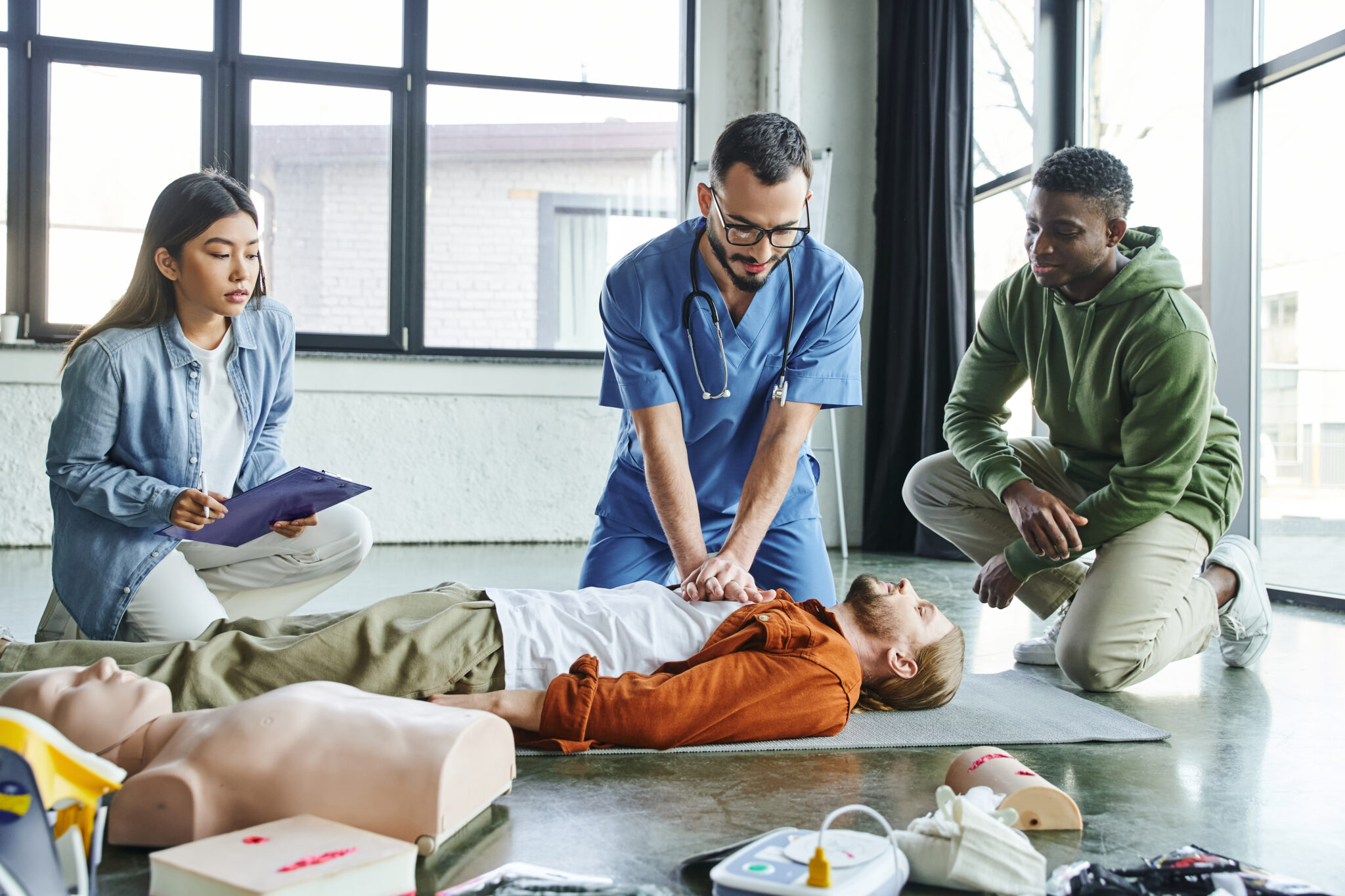
For non-clinical groups, one of the most functional slice of "innovative" to add is bag-mask air flow for respiratory system arrests and peri-arrest states. The technique is deceptively tough. An aide has to hold a limited seal with the mask while the various other presses the bag slowly, expecting noticeable chest increase. If your site stores a bag-valve-mask and oxygen, invest the moment to exercise quarterly. If you can not suffer that, do not include the gear simply to tick a box.
Decay of skills and the situation for refreshers
CPR is a psychomotor skill. Like connecting knots or playing a musical instrument, it fades without usage. Research studies recommend purposeful decay in just 3 to six months for compressions and AED steps. This is why I press for a cpr correspondence course every year, with informal drills in between. For innovative teams, refreshers must be shorter and a lot more constant. Ten-minute simulated codes after handover, or monthly situations with rapid debrief, keep the edges sharp.
Many first aid training carriers supply brief cpr courses tailored to those who just need the resuscitation component. This serves for work environments where the first aid certificate remains legitimate, but the team want hands-on CPR technique mid-cycle. Attempt to exercise on various manikins if you can. Some replicate upper body recoil and provide comments on compression depth and price. Data-driven feedback tightens skills much faster than spoken coaching alone.
Equipment truth check: what you will carry the day
Before reservation anything, audit your setting. An AED is the single most impactful gadget for out-of-hospital arrests. If your site has one, draw it out of the closet. Examine pad expiration days, battery indications, extra pads for kids if applicable, a towel or razor for sweaty or hairy chests, and scissors for apparel. If you have greater than one AED on a large site, mark their areas on a map and see to it safety and security and reception staff know.
If you plan to train on bag-mask air flow, validate you have masks in several dimensions, oxygen cyndrical tubes serviced and loaded, regulatory authorities examined, and suction readily available. Do not educate beyond your devices. It types complication and doubt in a crisis.
Matching program depth to your threat profile
Think regarding 3 variables: who you serve, the delay to specialist treatment, and the predictability of emergencies in your context.
Schools and childcare settings profit profoundly from infant and child modules within a first aid and cpr course. Kids are not miniature grownups. Airway dimension, chest compressions, and choking maneuvers vary. Moms and dads who have done infant CPR method record reduced panic and quicker action when a child chokes on a grape or a coin. In my classes, we constantly decrease that circumstance and repeat it up until it is nearly automatic.
Remote worksites, from mines to wind ranches, might see longer EMS response times. Right here, intermediate abilities like oxygen management and bag-mask air flow can connect the space if maintained appropriately. The training time boost, so balance it with on-site drills and devices checks. If your truth includes helicopter discharges and weather condition hold-ups, progressed training ends up being much less optional.
Clinics and oral techniques are deceitful. Emergency situations feel rare till they are not. Sedation, vasovagal responses, and covert heart condition in waiting areas are a truth of life. These teams rest close to displays, oxygen, suction, and defibrillators. Advanced CPR training is the best fit, and you must pierce duty assignment: that calls for help, that begins compressions, that handles the air passage, that pushes the cart.
How to check out a program rundown like a pro
Training suppliers listing long menus. Focus on compound. You desire an overview that defines hands-on time, manikin-to-student ratio, and circumstances that match your environment. Ask whether the class uses comments manikins, whether AED method includes various models, and how teachers correct ventilation rates to stay clear of over-inflation.
Avoid training courses that stuff excessive right into insufficient time. A complete first aid course with CPR that runs four hours for a lots individuals can not provide meaningful method. 6 to eight hours is a reasonable block for adults to practice skills, soak up knowledge, and pass evaluations without being rushed. Advanced programs should schedule a minimum of half the time for scenarios.
If your company is First Aid Pro or another large organisation, request for the trainer's background. Real-world responders bring nuance first aid certification courses in my area that moves do not. They will certainly talk about backboards that do not fit narrow corridors, or AED cupboards that secure inadvertently, or what to do when your only trained initial aider is the one that collapses.
The human variables you can not ignore
In real occasions, the technical abilities matter, but the human ones usually determine the end result. I have seen groups ice up while a person looked for the AED secret. I have seen compressions stop due to the fact that 2 rescuers suggested concerning the correct ratio. I have actually listened to a rescuer suspend loud so loudly that no one listened to the AED recommend a shock.
Your course must teach role quality, communication patterns, and scene management. Even a fundamental cpr course can build this by designating a leader that aims and calls names: "Alex, phone call emergency solutions. Priya, bring the AED. I am beginning compressions." Great teachers practice this up until it appears natural. The objective is to minimize the secs lost to complication, and to shield spectators from spilling right into the scene.
Fatigue monitoring is another under-taught aspect. After 60 to 90 seconds, many people's https://paxtonzqen167.huicopper.com/the-relevance-of-cpr-qualification-for-healthcare-professionals compressions shallow. Develop a routine of changing every two minutes during rhythm checks. The smoother you make that exchange in training, the much less pause you will carry the day.
Certification, acknowledgment, and company compliance
Most employers want a first aid certificate lined up with national criteria. Inspect the code or reference used by the company and guarantee it satisfies your regulator's requirements. For health care personnel, advanced programs commonly map to certain specialist criteria and may carry continuing education credit reports. If you require CPR for your specialist registration, confirm that the cpr courses you choose satisfy the specific phrasing on your license renewal.
Be wary of ultra-cheap, online-only CPR certificates that offer no hands-on evaluation. While concept issues, you can not find out correct compression deepness, hand positioning, or mask seal without comments. Combined discovering can function well: concept online, skills assessed in person. If you select combined, do not skip the functional. That is where the discovering secures in.
How to take advantage of whichever course you pick
Training is an event. Competence is a habit. After you finish a first aid and cpr course, construct tiny routines that maintain abilities live.
- Schedule brief refreshers. 10 minutes monthly on compressions and AED arrangement defeats a solitary marathon session every 2 years. Rehearse your atmosphere. Walk to the AED, open the cabinet, and inspect supplies. Practice providing clear instructions to emergency situation services with your actual address and gain access to instructions. Rotate duty. In workplaces, have different employee lead drills. Confidence spreads when more people attempt the management role. Gather near misses out on. If someone chokes yet recuperates without treatment, chat it through. What went right, what would certainly you change, and what equipment requires attention? Log checks. Batteries die and pads end. A simple monthly checklist prevents shame and hold-up when seconds matter.
These routines set you back little and protect your training investment. They likewise lower stress and anxiety. The following time you listen to a thump in the lunchroom, you do not begin with zero.
Edge situations and sincere trade-offs
Not every situation fits neatly right into basic or innovative groups. Below prevail predicaments I see.
Volunteers at large public occasions occasionally promote advanced skills. The better course is a strong standard group with radios, clear areas, and wandering AEDs. If you happen to have a doctor or paramedic on the team, agree on how their scope integrates instead of attempting to upskill every person overnight.

Small clinics with minimal team deal with an option in between deep training for a couple of or broad basic skills for all. I prefer a tiered method: every person masters high-quality compressions and AED use, while a part trains in respiratory tract monitoring and medications if permitted. After that you pierce how that part gets to the scene fast.
Parents often ask whether to consist of rescue breaths. For adult sudden cardiac arrests of presumed cardiac origin, compression-only CPR can be reliable in the very first few mins, particularly for inexperienced rescuers. In sinking, overdose, or pediatric arrests, ventilation is more important. A good cpr course will certainly show both, then aid you determine which to use based on the scenario. The sensible selection is to find out both skills and default to compressions if you are alone and can not handle breaths well, or to breaths and compressions if you have actually help.
Workplaces sometimes take into consideration oxygen because it really feels sophisticated and liable. Oxygen aids when used correctly yet includes upkeep, fire threat, and training demands. If your personnel will certainly not exercise bag-mask ventilation quarterly, keep your system simple: superb compressions, quick AED deployment, quick EMS activation.
Cost, time, and opportunity
Budget and organizing issue. A basic first aid course with CPR can run as a solitary day or split right into 2 half-days. Advanced training will likely require at the very least a day plus pre-reading or on the internet modules. The concealed cost is lost efficiency throughout training hours. The covert benefit is fewer lost hours later on as a result of avoidable occurrences, tighter emergency responses, and team who feel valued.
Compare providers on greater than cost. Inquire about trainer-to-student proportions. 8 trainees to one trainer is solid for hands-on. Sixteen to one starts to weaken comments unless there are assistant trainers. Ask whether you can tailor situations to your atmosphere. If your team deals with rooftops, you intend to practice on constricted surfaces and review risk-free access for responders.
A sensible course to your decision
Start with your environment and end with your people. Draw incident logs for the past two years. Talk to team around near misses they never reported. Check your EMS response times, also if just in arrays. Stroll your site and find the AEDs. From that image, compose 2 sentences that define the emergency situations you are more than likely to face and the tools you will actually have. After that match the course.
For most offices, retail shops, and community teams, a well-delivered first aid and cpr course with yearly CPR refresher courses is the wonderful place. For child care, consist of solid infant modules and practice choking drills typically. For facilities and higher-risk websites, include innovative CPR where devices and duties sustain it, and plan persisting simulations.

When unsure, keep your system straightforward and practiced as opposed to complex and rusty. Top notch compressions, early defibrillation, clear interaction, and constant leadership save lives. Programs assist you build those pillars. Select the one that you will certainly sustain.